By Shawn Maus
There is something exciting about watching a new play evolve in real time.
With the full three-act staged reading of Clos(in)g by Megan Benjamin Bennett, American Legacy Theatre (ALT) continues to demonstrate why its Playwrights for Change residency program is one of the most important artistic incubators in Cincinnati theatre right now.
Having reviewed the earlier Act One reading last year, returning to experience the complete script feels especially rewarding. What stands out immediately is how much tighter the pacing feels and how much sharper the character dynamics become. Bennett clearly listened to the process without sanding away the raw humanity that made the first reading compelling in the first place.
And make no mistake: this play lands.
The People Inside the Building
Clos(in)g begins in the aftermath of the death of Angela Martin–the beloved matriarch of the apartment building and wife of longtime resident George. Angela is more than a tenant. She is the emotional glue holding this small community together. Her passing leaves behind not only grief but uncertainty, exposing fractures and fears that have quietly simmered beneath the surface for years.
That uncertainty quickly escalates when the residents learn the building has been sold and a sudden rent increase threatens to displace many of them from the community they helped build. What follows is a deeply human exploration of belonging, survival, generational conflict, identity, and the emotional toll of trying to hold onto “home” in a system that increasingly treats housing like a commodity rather than a necessity.
Act One establishes the emotional groundwork. But Act Two is where the play truly digs in its heels and demands the audience wrestle with it.
Bennett introduces what initially feels like an overwhelming number of ideas and emotional threads: gentrification, youth versus adulthood, divorce, healthcare, blood sugar levels, PRIDE, frozen yogurt, broken systems, financial insecurity, and the exhausting reality of trying to keep a life together while the ground shifts beneath you.
On paper, that sounds like chaos.
Onstage, it becomes something remarkably human. One line especially resonates during the talkback:
“No one can hear you if you don’t speak.”
That line lingers because Bennett understands something many playwrights miss: people rarely experience crises one at a time. Life stacks complications on top of each other until the emotional weight becomes unbearable. Clos(in)g captures that accumulation beautifully.
And thankfully, Bennett pays it off.
The emotional resolutions feel earned rather than manufactured. The play trusts its audience to sit in discomfort before delivering catharsis.
The Heartbeat of the Ensemble
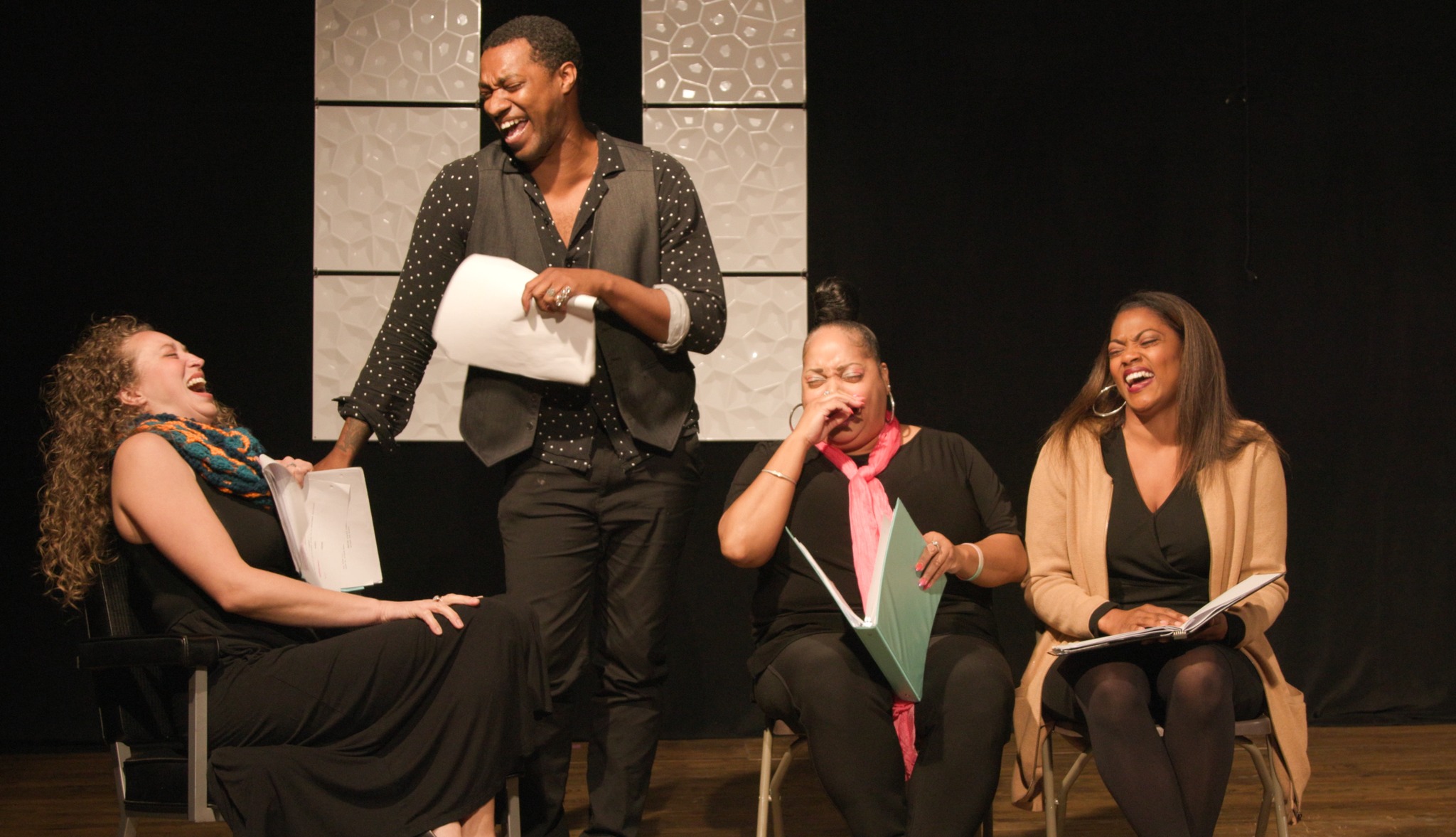
One of the most impressive elements is the ensemble itself.
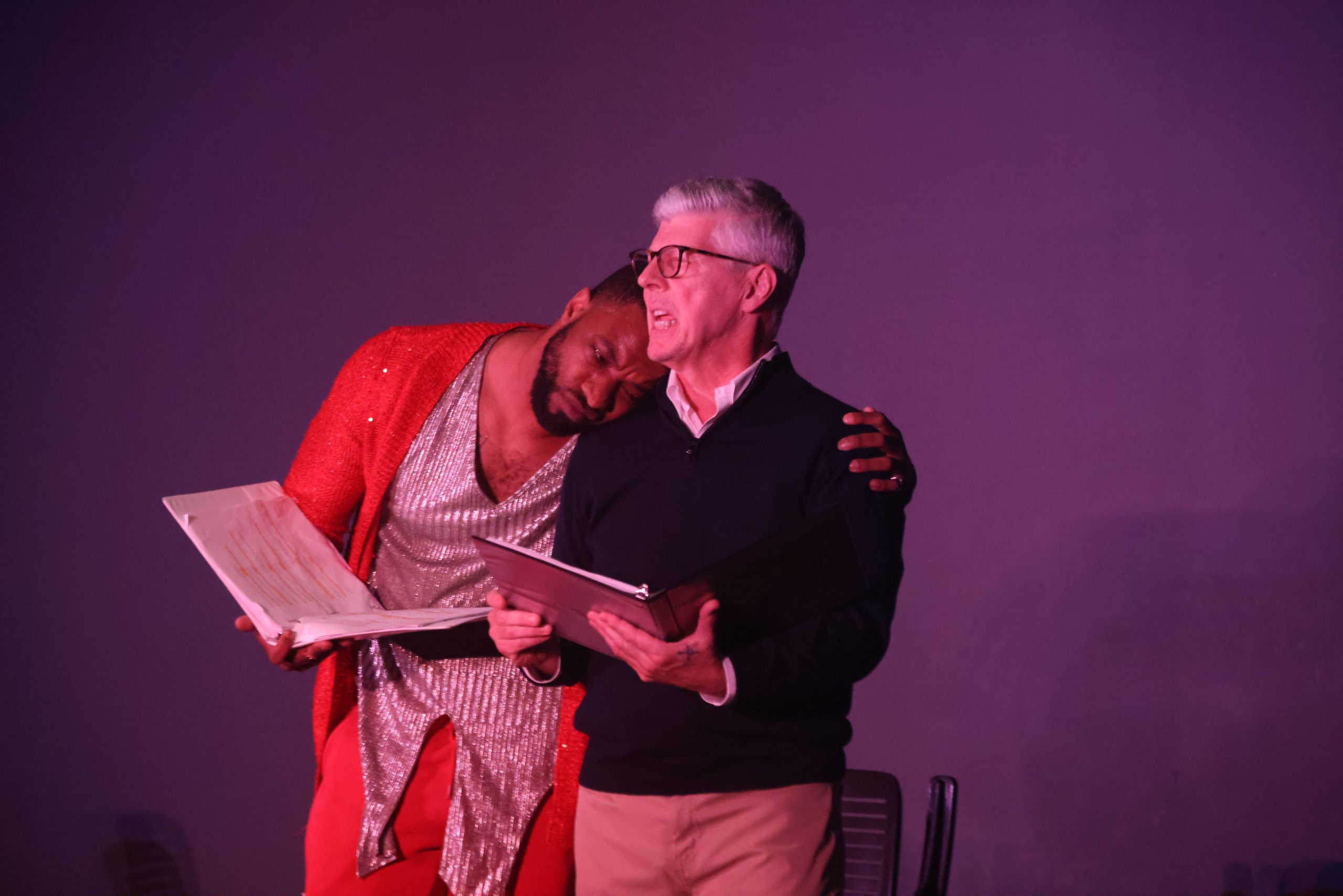
This is not a polished Broadway production with elaborate sets, lighting cues, or technical spectacle. It is a staged reading. Some actors still hold scripts. A few even read from iPhones.
And yet within minutes, the scripts disappear.
That is a testament both to Bennett’s writing and to the extraordinary commitment of this cast.
No performer tries to dominate the room unnecessarily. The actors understand the rhythm of ensemble storytelling — stepping forward when their characters emotionally require it and receding naturally when the story demands focus elsewhere. The result is a deeply organic performance where every character feels fully inhabited.
What stuns me most is how emotionally invested I become. I stop watching actors read pages. I start worrying about these people. I care about their choices, their pain, their futures, and their relationships.
That’s the magic trick theatre pulls when writing and performance align.
And considering this ensemble has only a limited rehearsal process, the accomplishment becomes even more impressive.
The Production Team — Building a Play in Public
Because this is a staged reading, there are no major technical design components to discuss in the traditional sense. No elaborate scenic design. No lighting spectacle.
But honestly, that simplicity works in the play’s favor.
The staging gives the material room to breathe. It forces the audience to lean into the words, the relationships, and the emotional architecture of the piece rather than relying on production mechanics.
More importantly, the evening reinforces why ALT’s two-year residency process matters so much.
Following the performance, the audience stays for a talkback with Bennett and the cast — one of the most valuable aspects of the residency model. These conversations transform audiences into collaborators. Reactions, frustrations, emotional responses, confusion, laughter, and tears all become part of the developmental ecosystem of the play itself.
That kind of artistic investment is rare. And frankly, Cincinnati theatre is better because of it.
Shawn says…
Great theatre doesn’t hand you answers neatly wrapped at curtain call. It unsettles you. It follows you home. It keeps talking long after the room goes quiet.
Megan Benjamin Bennett’s play does what great theatre has always done best: it creates space for audiences to wrestle with discomfort, grief, anger, hope, and the contradictions of modern life.
Even in staged-reading form, this piece already carries that power. Or maybe especially in staged-reading form.
Because without spectacle to hide behind, all that remains is truth. And in this case, that truth lingers long after the scripts close.
Bottom Line
If you have the opportunity to experience Clos(in)g as it continues its journey toward a full production, take it.
Not simply because it succeeds as theatre, but because it asks difficult questions worth sitting with.
And because American Legacy Theatre continues to prove that investing in new voices and new plays is one of the healthiest things a theatre community can do.
One more chance to see the staged reading of Clos(in)g Sunday, May 17, 6:30 PM – 9:30 PM EDT at the Contemporary Arts Center. Get tickets HERE.
On-demand streaming will also be available May 22–31. Go to the ALT website for more info.