
By Liz Eichler
I love a show that sends me down a research rabbit hole—one that compels me to fact-check, to reread history, and to discover that what initially feels implausible is, in fact, rooted in documented events.
As someone who has brought pets to be blessed on St. Francis’s Feast Day (October 3), I realized—somewhat sheepishly*—that I knew the legend far better than the man himself. The birds, the animals, the gentleness, versus the full backstory. The man we now call St. Francis of Assisi was once a privileged merchant’s rebellious teenage son. And when he received his calling, his parents desperately wished he would not answer.
That revelation sits at the heart of Francis: The Man from Assisi, a new musical by Tom Long (book and lyrics) and Alan Pote (music). A staged reading of this ambitious work-in-progress, was presented by The Story Collective and Friends of the Groom Theatre Company on January 24, 2026, at the beautiful and historic St. Thomas Episcopal Church in Terrace Park.
Francis’s Early Life
If you’re expecting a gentle, animal-obsessed saint from the opening number, look elsewhere. This story begins around the year 1200 in Umbria region of Italy, when Italy was a collection of independent (yet bellicose) city states. Francis is introduced as a troubadour–and a rake. He’s a young man who knows only what he doesn’t want: a life working at his father’s business, selling fine fabrics. Glory calls to him.
Despite his parents’ objections, Francis joins the Assisi army to fight Perugia, a neighboring city-state vying for dominance. The Battle of Collestrada proves brutal and humiliating. Assisi loses men, honor, and illusion. As the musical puts it:
“No shining glory—only mud.
No pride in vict’ry—only blood.”
The Battlefield and Prison Changed Him
Francis is taken prisoner, eventually (six months to a year later) ransomed home by his father. The ordeal—combined with illness and a long recovery under his mother’s care—fundamentally alters him. He questions everything he once wanted, and feels he hears God calling him toward a radically different life.
That calling first manifests in small, tangible acts: charity, humility, and the rebuilding of a crumbling chapel. (That chapel still exists today, preserved within the Basilica of St. Mary of the Angels.)
The physical rebuilding becomes metaphorical. By 1200, the Church itself was badly in need of repair. Corruption was widespread, including the selling of indulgences—financial transactions promising salvation in exchange for cash. Francis’s response was not rebellion through force, but resistance through example.
To many in Assisi, Francis–they kids they watched grewing up–seemed to have had a mental breakdown. But others were drawn to his simplicity and conviction. Among them was Clare–a young woman of means who defies her family, cuts her hair, renounces wealth, and joins Francis’s movement. She would later found her own order, becoming St. Clare of Assisi, founding an Order known as the “Poor Clares.”
Francis is also referred to as a “mystic.” He experiences visions, hears God speak directly to him, and—according to tradition—receives the stigmata. He preaches peace during a time of Crusades and warfare, and later legends credit him with brokering dialogue across religious and political divides. By the end of his life, his health is shattered. Blind and weakened, he retreats to nature—his quiet refuge—where he communes with God until his death on October 3, 1226, at just 44 years old.
This Work in Progress
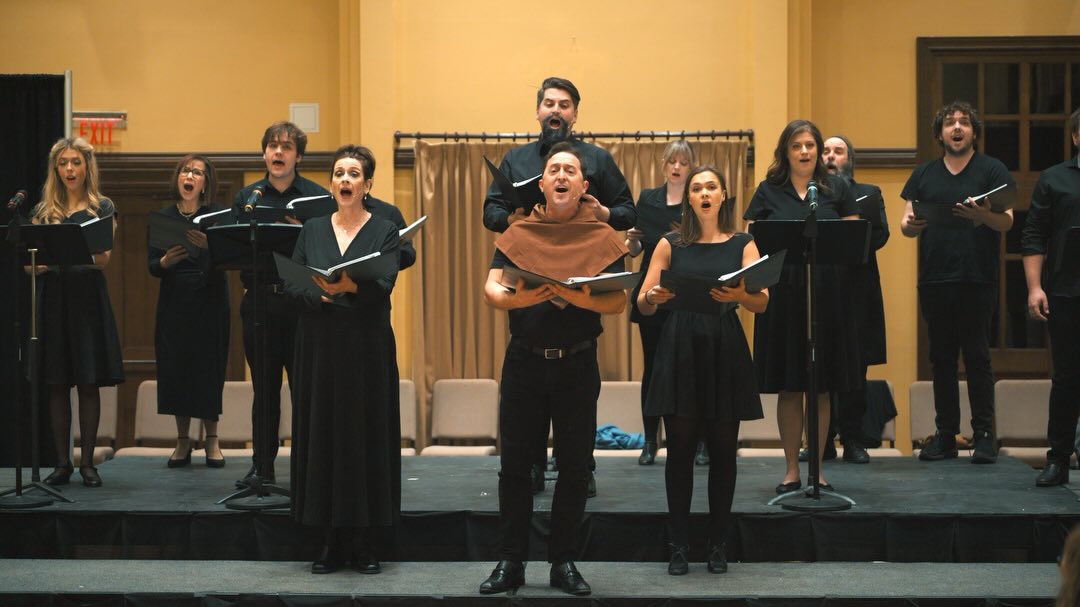
Francis: The Man from Assisi attempts to wrestle with the full scale of this life, and it doesn’t shy away from its darker chapters. The Crusades and battlefield violence loom large, particularly in the rousing “March to Glory.” One of the show’s lighter moments, “Letters for Ransom,” is an exchange song, reminiscent of “Your Obedient Servant” in Hamilton. It is a welcome tonal shift. “Sermon to the Birds” provides the clearest nod to Francis’s most enduring legend, while “Where You Go,” sung by Clare as she commits to the movement, stands out as one of the score’s most emotionally grounded numbers.
The final “Prayer of St. Francis,” sung by the full ensemble of fourteen performers, closes the presentation with reverence. (I can imagine the lighting!)
This is a big treatment of a very big story. For a work still in development, it was impressively delivered. The cast wore coordinated black attire accented by select costume pieces, allowing imagination to do much of the work. Alan Pote served as musical director and pianist, while Tom Long staged the reading and coordinated projected slides suggesting future scenic and battle designs.
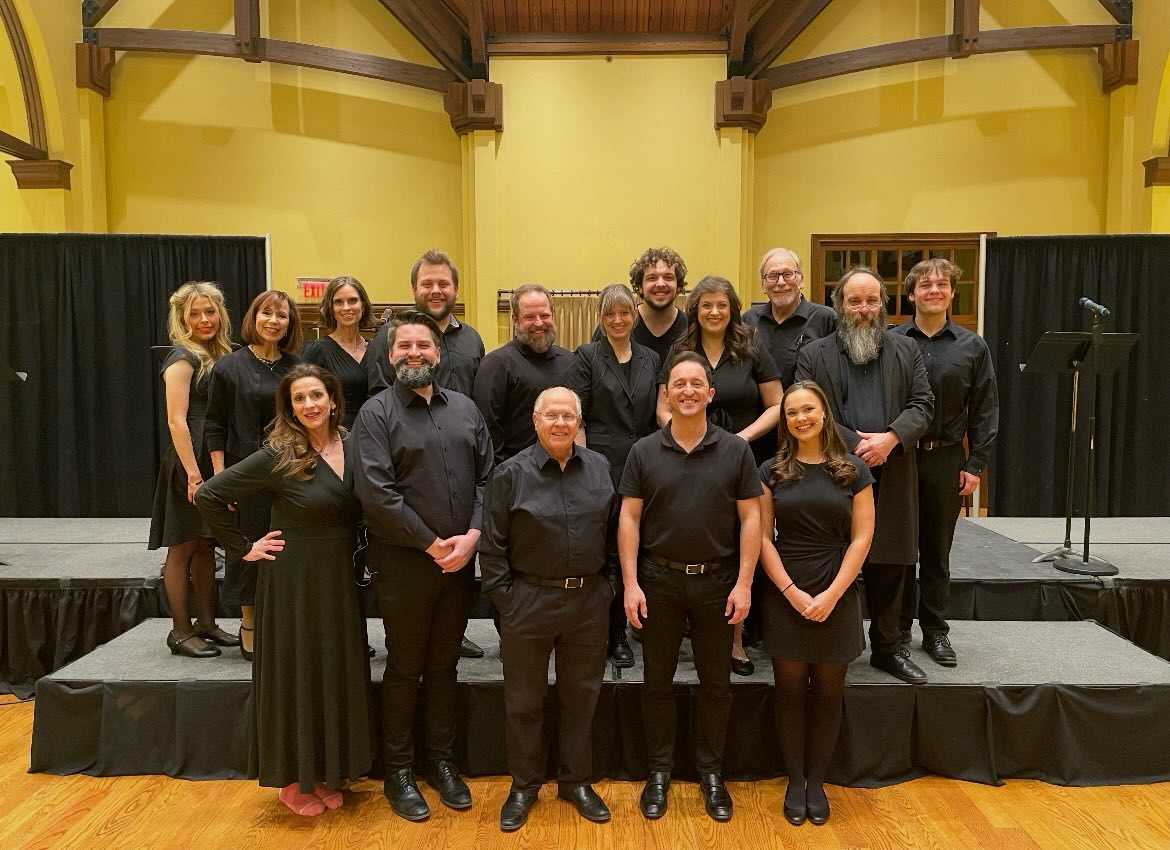
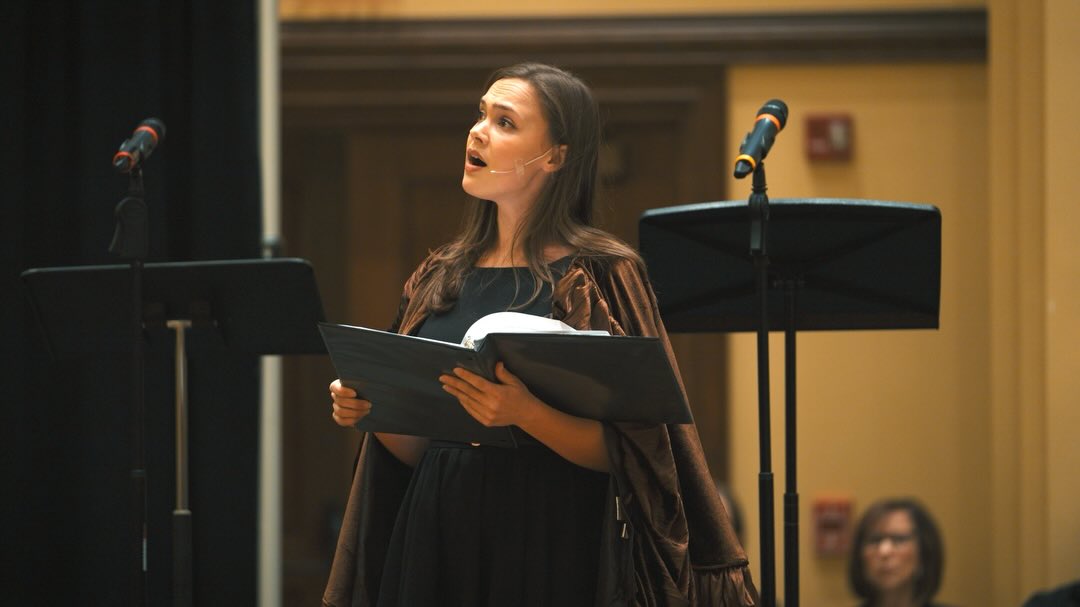
Musically, the score ranges widely—from sweeping, classical musical theatre (think Man of La Mancha), to jazzy gospel, to intimate ballads. The ensemble handled these shifts with confidence and clarity. The ensemble: Patrick Winkles (Francis), Kayla Stroud (Clare), and a strong supporting cast of Jack Bunch, Will Ellis, Gabe Hoyer, Susan Jung, Karly Kuhn, Matt Lovell, Justin Reilmann, Jocelyn Sluka, Claire Tally, Teresa Tally, Monica Tenhover, Vincent Teschel, and John Woll.
Looking Ahead
The musical shows clear potential—and genuine passion. It is mostly sung-through, with clever and contemporary lyric touches. For example, Assisi is introduced as “the latest Babylon,” and the show, in a nod to Gen Z, jokes that it puts the “mid” in medieval. These moments landed well. (Yet, I wonder how a “Gen Z filter” might change the show–for good or “mid.”)
As explained in the pre-show remarks, this staged reading represents just one step in a long development process. Songs may be cut or combined; storylines clarified or sharpened. Personally, I found myself wishing for one additional quiet solo for Francis near the end—something reflective, spare, and deeply interior before his death, and possibly eliminating another somg from the second act to make room for it.
More humor may yet emerge, as the lightest moments drew the biggest audience response. The creative team will also need to clarify their intended audience and reckon with the practical realities of mounting a show of this size and scope. (A large cast is expensive for Broadway, but ideal for the Catholic or christian high school.)
Overall
This is an ambitious project, rooted in a compelling blend of documented facts and enduring legend. It is a story rich in history, rebellion, and redemption. A fully realized production will certainly have the potential for great spectacle as well, with long-swords battles, medieval luxury, the Umbrian backdrop of buildings, flora and fauna, and rays of light.
In a land once torn by war, Francis preached peace—and Francis: The Man from Assisi aims to do the same through music, story, and scale. I’ll be watching closely to see where it goes next. It is an inspiring story for all–not just for church folk.
To follow the development process, visit The Story Collective and Friends of the Groom Theatre Company. For additional historical context, the Rick Steves Tour of Assisi—serendipitously aired the same day—offers a rich and grounding companion piece.
*sorry, but I had to do it