By Liz Eichler, ATCA member
Cincinnati has a thriving theatre scene, and organizations including the League of Cincinnati Theatres work hard to support and promote it. But like many theatre lovers, I still plan trips around what I can’t see at home. Usually, that means New York—especially for shows that may eventually tour through the region (or never make it here at all, such as Queen of Versailles).
This spring, however, I discovered a new destination I’m already eager to revisit: Milwaukee.
Milwaukee boasts an impressive theatre district. Within walking distance, you’ll find Milwaukee Rep (think Cincy Playhouse plus an exciting cabaret space), the historic Pabst Theatre (like the Taft), the Marcus Performing Arts Center (similar to our Aronoff), a symphony hall, a children’s theatre, and more—all supported by ample parking.

Milwaukee Repertory Theatre has just completed a multimillion-dollar renovation of their Associated Bank Theater Center. They recently hosted more than 80 theatre leaders and members of the American Theatre Critics and Journals Association (ATCA, of which I am a member) from across the U.S. and Canada for a convening titled From Crisis to Catalyst: Transforming the Regional Theatre Landscape. The conversations were candid, with leaders sharing both challenges and successes in an evolving industry. (More on that soon.)
Just as importantly, Milwaukee Rep showcased three productions that highlight the breadth and strength of its work:
The Piano Lesson
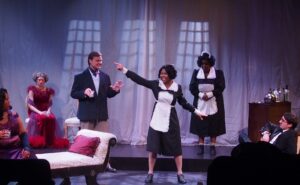
First, in the Checota Powerhouse Theatre, August Wilson’s Pulitzer Prize winning The Piano Lesson, a powerful exploration of legacy and responsibility to the future. Directed by Lou Bellamy, the production is anchored by standout performances, particularly Nubia Monks as the capable Berniece, James T. Alfred’s unforgettable Boy Willie and James Craven’s grounded Doaker Charles. La’Tevin Alexander delivers an earnest and likable Lymon, too. Vickie Smith’s scenic design creates a charming lived-in 1930’s Pittsburgh home for Berniece, who stands firmly in her convictions even as the men around her push their own, often misguided, agendas. The show begins with Mama Ola polishing the piano “with her tears.” Boy Willie and Lymon drive up from Mississippi with a truck load of watermelons to sell. Willie has the intention of taking that beloved piano he co-owns with his sister Berniece, and selling it. Boy Willie has a checkered past, he’s a sharecropper who spent time in prison, but now has the opportunity to buy land from the family that once enslaved them. But the piano is heavy with family lore, and may have a mind of its own.
This is a three-hour tour of a family’s history, mostly brilliantly presented. One highlight is the strikingly powerful work song “Berta, Berta” which grounds the men as one. Some may argue Wilson overwrote parts of the play with repetition to reinforce some characters. Cincinnati audiences will have the opportunity to decide for themselves in this co-production when it arrives at the Playhouse in the Park in April.


McNeal
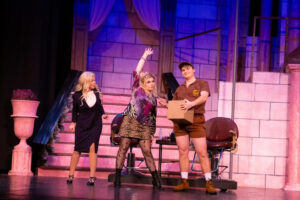
On our second night we visited the Herro-Franke Studio Theatre. McNeal by Ayad Akhtar examines originality and the ethical gray areas of AI. The play centers on a lauded yet loathsome writer accused of plagiarism who justifies his process by pointing to the long history of adaptation in literature. Shakespeare borrowed heavily from previous tales, for example. Directed by MRT Artistic Director Mark Clements, the production is visually cohesive and forward-thinking. Scenic, lighting, sound, and especially Timothy Kelly’s video design work seamlessly to create a sleek, tech-infused world. Peter Bradbury leads the production with a compelling performance of this driven author we do not really like. His character’s choices invite debate and conversation. N’Jameh Camara, Ty Fanning, Jessica Ko, Jeanne Paulsen, Sara Sadjadi and Bridget Ann White complete the powerful cast. NOTE: MRT recently announced that McNeal is the highest grossing show ever in their studio theatre space. This shows Milwaukee audiences do not shy away from something new.
Ain’t Misbehavin
The highlight of our third night, opening the new cabaret space, Ain’t Misbehavin’ offers a completely different energy. Directed by E. Faye Butler, with musical direction by William Foster McDaniel (who also plays piano), the production features a talented quintet—Amahri Edwards-Jones, Rae Davenport, Katherine Alexis Thomas, Jarran Muse, and Brad Raymond—performing nearly 30 songs by Thomas “Fats” Waller and his contemporaries. The revue captures the Black experience from the hardships of the Great Depression to the vibrancy of the Harlem Renaissance. Fast-paced and largely joyful (with plenty of cheeky innuendo), the show is elevated by strong individual performances and particularly stunning costumes in Act II. For those familiar–or not–with the Grammy-winning 1978 cast recording (Nell Carter, André DeShields, Armelia McQueen, Ken Page, and Charlaine Woodard), this production offers nostalgia, a fresh interpretation, and a lot of laughs in a lovely casual environment. (I still can’t get “Lounging at the Waldorf” out of my head!)
The Experience
The welcoming experience extends beyond the stage. From the underground parking garage, elevators open into a spacious, marble-lined atrium with clear signage leading to each theatre at MRT’s Associated Bank Theater Center—or directly into the Saint Kate Arts Hotel, seamlessly connected to the complex. The hotel itself is an experience: each room includes a record player with retro vinyl albums, a ukulele, and art supplies, inviting guests to engage creatively. Even the signature scent of the space ties back to the bar, where a well-made brandy old fashioned sets the tone.
What a joy it is to eliminate the usual friction of theatre-going—no driving across town, no hunting for parking, no bundling up between venues. Instead, you simply step out of your room and into the theatre.
And while it’s tempting to stay inside, Milwaukee rewards exploration. The city blends German Renaissance, Victorian, and modern architecture, reflecting generations of civic investment. One guide shared that if you wanted to be successful in Milwaukee, it was through beer, cheese or meat packing, and their names are still reflected on buildings in town. The Riverwalk offers an easy, scenic path along the Milwaukee River through downtown, including the ever-popular “bronze Fonz” statue and many bronze ducks.


Food and gathering spaces add to the appeal. One fun feature is the 3rd St. Market Hall, recently named one of the top food halls in the country, offers everything from pizza to pho to empanadas, alongside a self-serve beer wall. During my visit, it became a lunchtime hub for a nearby anime convention. Elaborately costumed attendees mingled with families out for lunch or downtown shopping. For a more historic stop, the Milwaukee Newsroom Pub features a wall of signatures from notable visitors dating back to 1885.
A City Filled with Arts–and Sports
The Milwaukee Museum of Art, designed by Santiago Calatrava, is a destination in itself. Its sweeping white forms—both serene and futuristic—make an immediate impression, while Windhover Hall and the movable, wing-like Burke Brise Soleil are architectural highlights. Even beyond the permanent collection, the inclusion of local student work speaks to the city’s investment in developing future artists.

Milwaukee’s cultural calendar shifts with the seasons. Summer is dominated by outdoor festivals—most notably Summerfest, which spans three weekends and draws major national acts from Garth Brooks to Pussycat Dolls and everything in between. During that time, many theatres scale back as union crews move into festival work. For theatre lovers, fall and early spring offer the richest opportunities to experience the city’s stages.
Film enthusiasts will also find plenty to explore, from belovedly maintained historic movie palaces to the Milwaukee Film Festival (April 16–30, 2026), which showcases both international cinema and local talent.
Of course there are the sports arenas nearby as well. Bucks fans also enjoyed staying at the Saint Kate hotel, sharing what a great sports town Milwaukee is.
I’ve been hearing about Milwaukee for years. Back in 1988, while working with the University of Delaware’s Professional Theatre Training Program—formerly affiliated with the University of Wisconsin–Milwaukee—I heard plenty about fish fries and brandy old fashioneds from transplanted faculty and staff. What I see now is a city—and a theatre community—that has continued to evolve, thrive, and influence others.
Milwaukee Rep, notably, is one of the few regional theatres to see revenue growth in recent years. That success reflects a clear understanding of its audience. They are committed to producing work that entertains while encouraging meaningful conversation that strengthens their community.
Conclusion: Explore Milwaukee
For Cincinnati theatre lovers, Milwaukee offers something we value: chance to experience top-tier regional theatre in a city designed to make it easy—and enjoyable—to see it all. It may not have Broadway’s spotlight, but it has something just as compelling—a vibrant, accessible theatre culture in the heart of the Midwest. No wonder Cincinnati’s Playhouse in the Park continues to co-produce with this remarkable team.
So consider heading about five and a half hours north, by car. In Milwaukee, you might just find another favorite theatre destination.