By Liz Eichler
Miami University’s season keeps getting better and better. No, not talking basketball this time—Miami University Theatre. Students and faculty shine in By the Way, Meet Vera Stark by Lynn Nottage.
The Vera we see on stage is nobody’s “by the way” or afterthought. Vera Stark is a determined young woman navigating the 1930s: the Great Depression, the lingering aftermath of World War I, and the tensions building toward World War II. She must also contend with being Black in 1930s America, and all the racism and expectations that come with it. After a successful career on the vaudeville circuit, she moves to Hollywood to pursue her dreams of stardom. While waiting for her moment, she takes the job available—a maid to a rising white starlet.
Nottage’s play unfolds across multiple eras. Audiences meet Vera in the 1930s and again in the 1970s as a guest on a talk show reflecting on her career. That program is later examined by a contemporary (2003) panel attempting to understand what happened to Vera Stark, a performer of such promise.
Star Turn
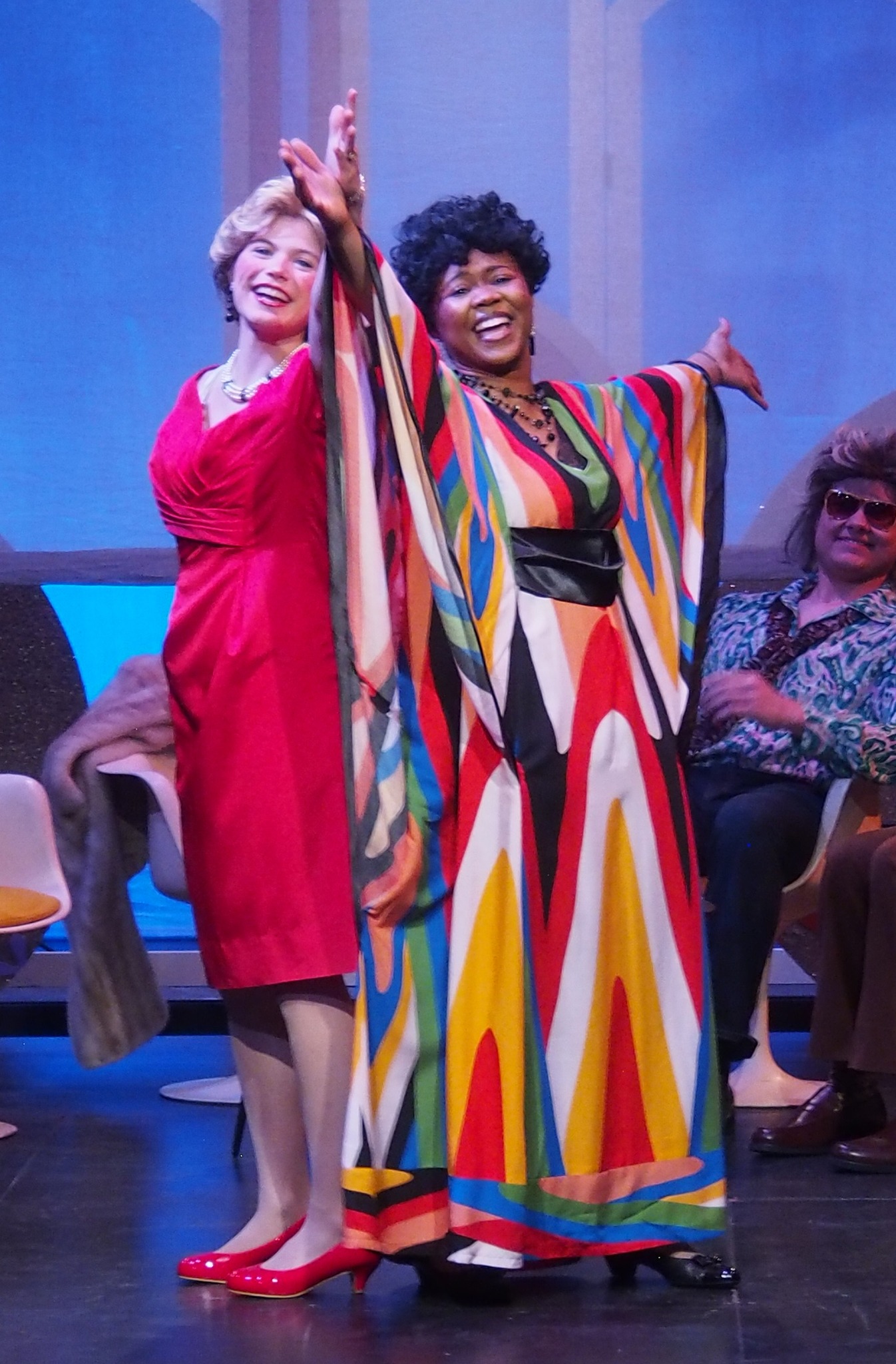
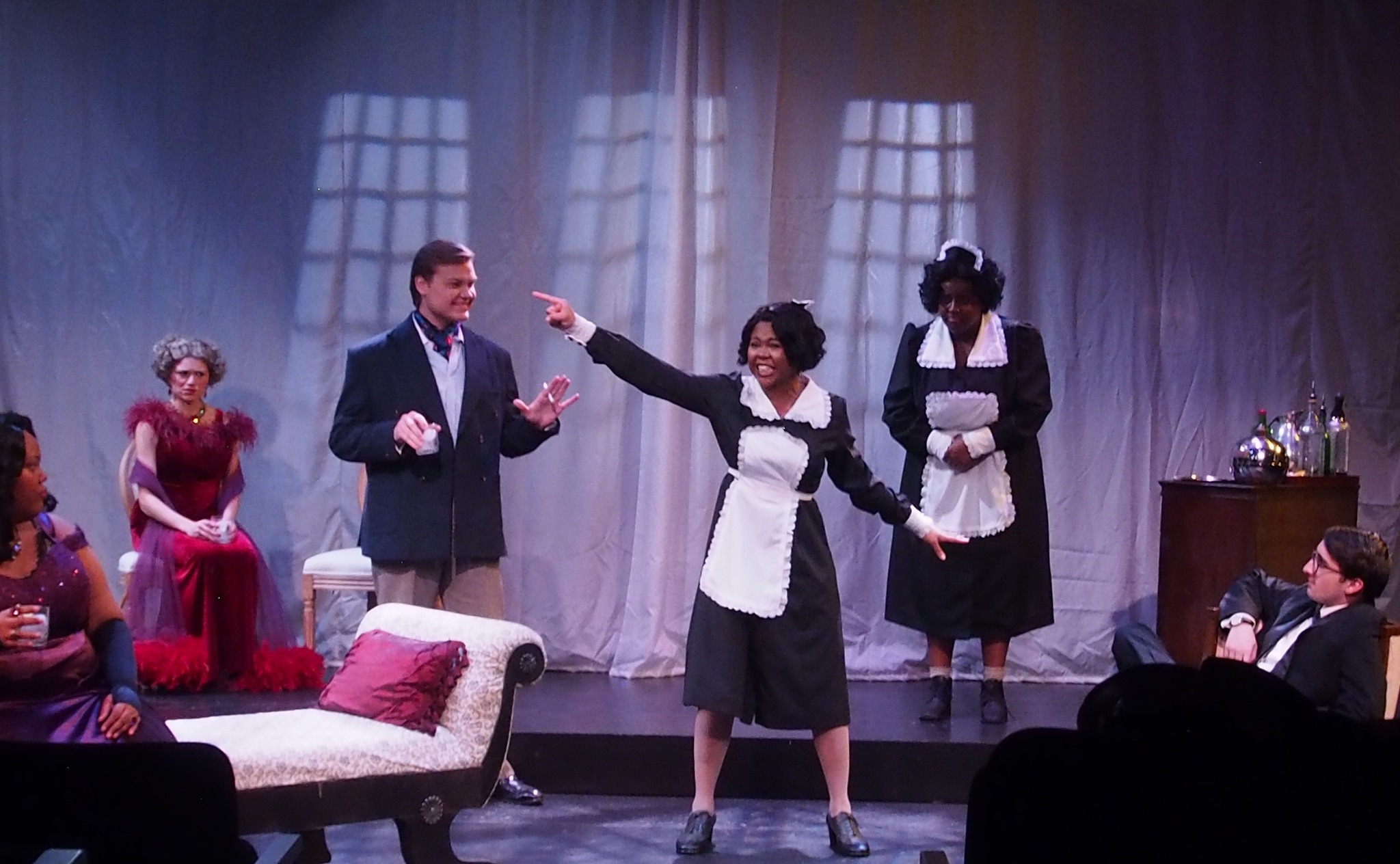
In the title role, Zamani Munashe elevates this production. She brings fire and fierceness to the character of Vera Stark, showing both the dutiful responsibility of a maid as well as the take-charge attitude Vera possesses when she is not at work. Munashe makes it clear why Vera believes she deserves more than the limited roles offered to Black actresses of the era.
At the same time, the performance establishes Munashe herself as a standout talent. Roles like Vera Stark do not appear every season, making this a welcome opportunity for a performer with Munashe’s range. We last saw her in Miami’s Antigone, presented by the girls of St. Catherine’s and, as then, she commands the stage with confidence. Here she also demonstrates a rich singing voice that can shake the rafters. She can sing, she can act, she has great timing–and charisma to connect with audiences. This girl is on fire.
Many Performers Play Multiple Roles
Her friend and employer Gloria Mitchell (Ali Lewis) also lives a dual life: publicly “America’s sweetheart,” while privately relying on gin to manage her anxiety. Lewis, a freshman, shows great promise and delivers a particularly strong performance in the film clip sequence.
Vera’s roommates are Lottie (Angelena Wilson) and Anna Mae (Valyncia Logan). Each woman navigates Hollywood in her own way—one sometimes taking gig work wherever she can find it, the other reinventing herself as a wealthy Brazilian woman. In the second act we see these performers again, now as pundits on a panel, each pitching a book and offering a unique viewpoint about what they believe happened to Vera Stark. Both actresses do admirable work and have good comedic timing.
The men in the story include Leroy, a smooth studio assistant (Benjamin Jones) working for a foreign director (Parker Hamrick), as well as a studio executive (Teddy Rahill). Each fulfills their role nicely in the first act, as well as taking on other roles in the second. Rahill leads the talk show, with Hamrick as a guest, while Jones leads a panel.
This period piece provides both theatre students and audiences the opportunity to understand the era from within. Questions such as why gin seemed more readily available than bourbon—or why smoking was so ubiquitous—sit alongside more serious historical realities: why was Vera repeatedly limited to servant roles rather than offered the same opportunities as white actresses?
While smoking is less common on today’s stages, contemporary performers still need to develop the skill of making it believable, and this production occasionally shows that challenge.

Production Team
Director Darnell Pierre Benjamin expertly guides the student performers, creating a strong sense of camaraderie and comfort among the women. There is a genuine ease and familiarity among the roommates as they squabble over borrowed clothes and shifts. Kudos also to Intimacy Coordinator Ashley Goos. One of the more memorable moments occurs between Vera and Leroy as he smooth-talks her within inches of her face, only for Vera to coolly blow smoke back at him. Well done, team.
Dialect Coach Julia Guichard ensures the various accents are clearly differentiated, and Parker Hamrick does an especially nice job with his groovy British accent.
Glorious Costumes
Visually, the costumes really shine in this production, due to Lisa Martin-Stuart, costume designer. From crisp maid uniforms—complete with freshly handmade aprons and caps—to glamorous feathered ensembles in authentic 1930s silhouettes, the costumes are a highlight. Leroy Barksdale’s natty outfit, from hat to wingtips, perfectly captures the swell of the era.
Later, the production shifts firmly into the colorful aesthetic of the 1970s talk show set. Finally, the 2003 panelists’ viewpoints are clear before they even speak a word. We can immediately anticipate the ideological clashes between the red-glasses academic Carmen Levy-Green and pundit Afua Assat Ejobo, who embraces her African heritage. The show also features roughly ten wigs, all well styled by Aniya Williams.
Gion DeFrancesco’s scenery balances the needs of the space with the demands of the production. He includes multiple curtains and some lovely moveable furniture pieces. Student Mary Johnston-Medina provides thoughtful lighting design that helps guide audience focus, assisted by Marly Wooster. Numerous sound effects (Trey Tatum)—from radio music to doorbells, telephones, and film clips—support the storytelling.
Stage Manager Elizabeth Bauer, along with assistants Jacob Gundrum and Rosie Kipperman-Shurelds, keep the many scene changes moving at a swift pace.
Additional shout-outs go to the “The Belle of New Orleans” film crew—Simion Collins, Emma Barton, and Lon Nease—part of the RiverSky Films team directed by Benjamin. One thing about this clip: it makes clear why the fictional film would have been so important in its time, and the performers fully commit to making that moment land.
Overall
Overall this is a refreshing production to see at Miami University. It appeared the houses full of Intro to Theatre students enjoyed the show as well. Productions should challenge students as artists while encouraging audiences to think a little more deeply about the stories we inherit. By the Way, Meet Vera Stark does exactly that, blending humor, history, and cultural critique. Miami University’s production delivers a thoughtful and engaging opportunity to have these conversations.
By the Way, Meet Vera Stark runs through March 15, 2026 at Miami University, Oxford, OH. Tickets are available HERE.