By Liz Eichler
Alicia Keys’ Hell’s Kitchen is playing at Cincinnati’s Aronoff Center, now until January 25, 2026. Hell’s Kitchen is an emotionally resonant evening of musical theatre. If you are a mother or a daughter, lived through the 1990s, love Alicia Keys’ music, or just appreciate high-energy, modern choreography and dance, this show is for you.
The Plot: A Coming of Age Story
Hell’s Kitchen is a coming-of-age story. Ali is a smart, passionate, sassy teenage girl growing up in Manhattan under the watchful (but suffocating) eye of her mother, Jersey. Jersey’s love manifests as fear–fear of teen pregnancy, violence, failure, and the city itself. (Alicia Keys’ real mom grew up in Toledo, but moved to NYC for NYU for acting classes, according to a childhood friend.) That fear nearly pushes Ali away, until music, and a music teacher, become the bridge that helps them both survive and understand one another.
The plot may feel familiar, but it is also easy to follow, which is not nothing in a large musical with this much sensory input. The book by Kristoffer Diaz clearly prioritizes emotional clarity over cleverness. There are some lines which get great audience response. The mention of Rudy Giuliani, for example. Or the line “they’re hormones in hoodies–and their brains don’t work” as Ali’s mom defends her overprotectiveness. The music organizes Keys’ songs and lyrics, creating her autobiography–with some creative license.
What elevates the story is its sense of place. In an opening scene, Ali rides her apartment elevator, identifying each floor by the music spilling from behind the doors—bucket drumming outside the building, classical, opera, all performers throughout the 42 floors. Even though she doesn’t speak Italian, she knows the opera singers are singing about love. Music is not just background here; it is destiny.

The Production: Grit, Texture, and Light
The production design works hard at establishing that place, capturing 1990s New York, distinctly separate from the glossy sitcom version of the era some younger people may know. The costumes (Dede Ayite) lean gritty and dark in Act One, with more sparkle and polish emerging later, mirroring Ali’s growth. This is not Fresh Prince in California; this is a tougher, more textured East Coast city.
Robert Brill’s set is layered with wrought-iron textures, levels, and black bars, brought to life by Natasha Katz’s dynamic lighting. Movable scaffolding pieces glide smoothly across the stage, transforming apartments into streets into concert spaces. Lighting (Natasha Katz) shifts from intimate, spot-lit domestic scenes to explosive, concert-style moments that put you in an arena.
Projections by Peter Nigrini are used effectively, most notably during “The Perfect Way to Die,” when a haunting cascade of young faces underscores the cost of life on the streets.

Music, Dance, and Sound: The Engine of the Show
This is, first and foremost, a musical powered by rhythm. The orchestra—two visible onstage and five in the pit, conducted by Emily Orr—plays loud and strong. The bass reverberates through the theatre, and through your bones. While I loved it, some audience members may feel the volume is overwhelming (ushers can provide earplugs). The intensity undeniably pulls you into the physicality of the music. And yes, on opening night the lead mic levels appeared to have been adjusted mid show.
Directed by Michael Greif, “Kaleidoscope” stands out as particularly well staged production number. “Teenage Love Affair” seamlessly flows into “Un-Thinkable (I’m Ready)” as Ali tries to connect with her crush. Act One crescendos with “Girl on Fire,” sung by Ali’s friends at a moment when everything seems to be going right—so, of course, you know it won’t last. And Greif includes one of my favorite things–when the show acknowledges it is a show. Example, when Jersey and Ali open a bag a chips in their kitchen, and then Jersey offers them to the chorus dancers as the scene transitions.
Choreographer Camille A. Brown gives the ensemble a rich vocabulary: hip-hop, modern, and Broadway styles blend fluidly with Step and Juba (thanks, program notes!). At times the dancers move in tight unison; at others, they break off into individual expression. If you’ve ever watched So You Think You Can Dance, you’ll recognize the emotional storytelling in the movement style the ensemble delivers with power, precision, and relentless energy.

The Performers: Where the Show Truly Shines
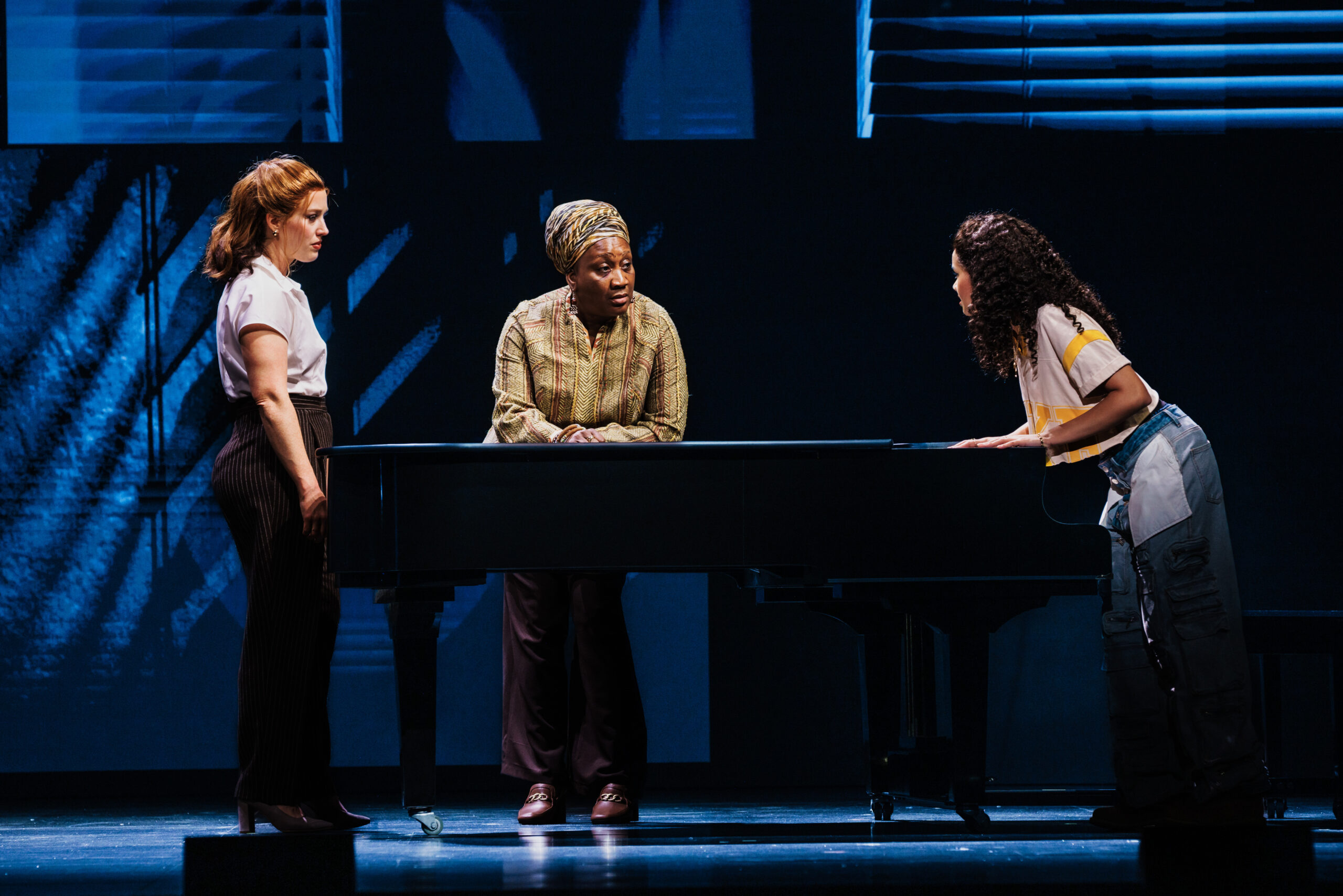
Maya Drake’s Ali is still settling into herself, which actually works for the character—a young artist in formation. An amazing young singer and recent high school graduate, she has a rawness that adds to her vulnerability. Kennedy Caughell’s Jersey, however, nearly stops the show. Her voice is commanding, her emotional range wide, and her portrayal makes it clear why love and fear are so tightly knotted for this woman.
Roz White is extraordinary as Liza Jane, the formidable elder of the building who teaches Ali that music is discipline, release, and survival. Her gravelly voice carries decades of lived experience, moving from raw to sublime. Desmond Sean Ellington’s Davis, Ali’s itinerant pianist father, brings warmth and smooth vocal charisma, making Jersey’s attraction entirely believable.
In Act Two, “Fallin’” and “Pawn It All” earn mid-song applause and standing ovations, as the leads fully unleash their amazing vocal acrobatics. These leads have meaty roles, showcasing singing. No wonder the two Tony Awards this show won in 2025 were for the Lead Performer (Ali, played by Maleah Joi Moon) and Featured Performer (Liza Jane, played by 40-year Broadway veteran Kecia Lewis).
Overall: A Story That Lands
Sit next to your mother–or your daughter–and the story becomes deeply personal. The awkwardness, the miscommunication, the fierce love between two people trying to get it right while navigating turbulent waters–it all lands. Truth be said, on opening night–a cold Tuesday in January–there were a few in the audience not fully engaged. But most were activated, dancing in their seats and mouthing the words. Perhaps for some Ali’s story may be mild compared to more glamorous or high stakes struggles from other musicals (like a boat sinking, or your uncle killing your father, or a performer dying from TB). But this “girl is on fire!” Keys is now a multi-millionaire with multiple income streams, despite the humble beginnings (and her “thirsty” teen years).
Alicia Keys’ Hell’s Kitchen is a solid juke-box musical full of love, some sass and electrifying dance. Powerful performances and Keys’ music reminds us how a place–and its rhythms–can shape who we become.

Tickets to Hell’s Kitchen
Alicia Keys’ Hell’s Kitchen is running January 13–25, 2026 at the Aronoff Center. It is part of First Financial Bank’s Broadway in Cincinnati series, presented by TriHealth.
Tickets are available at CincyArts.org.
Running time: Approximately 2 hours and 30 minutes with a 15 minute intermission.